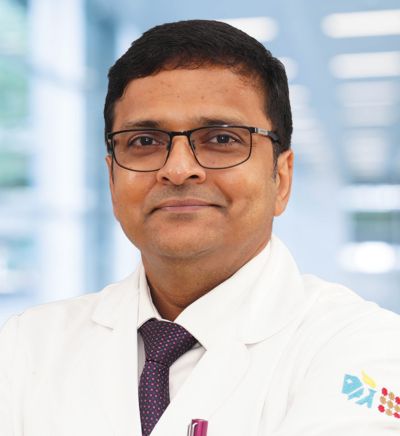
Dr. Mayank Mohan Agarwal is a highly accomplished and extensively trained Robotic Urological Surgeon, Uro-oncologist, and Kidney Transplant Surgeon with over 22 years of clinical experience (after M.Ch) and more than 10,000 major urological procedures to his credit. He is currently serving as Director, Urology & Kidney Transplant Surgery at Apollo Hospitals, Lucknow. A Gold Medalist in Urology with advanced fellowships in Uro-oncology and Female Urology, Dr. Agarwal has received specialized training and is certified by leading national (PGIMER, Chandigarh) and international institutions (MSKCC, NY; UCLA, LA; WFUBMC, NC, USA) and is recognized for his expertise in managing complex urological diseases through advanced robotic, minimally invasive and laser surgical techniques.
Dr. Mayank Mohan Agarwal is one of the few Intuitive-certified Robotic Urological Surgeons in Lucknow, Uttar Pradesh. He is widely recognized for his high-volume robotic surgical practice and expertise in Robot-Assisted Prostate Cancer Surgery and other Robotic Uro-oncology Surgery, contributing to Apollo Hospitals Lucknow becoming one of the highest-volume centers for Robotic Urological Surgery in the region. His extensive experience in robotic surgery allows patients to benefit from greater surgical precision, reduced blood loss, smaller surgical incisions, less post-operative pain, shorter hospital stays, and faster recovery.
Dr. Agarwal specializes in the treatment of Prostate Cancer, Kidney Cancer, Bladder Cancer, Ureteric Cancers, penile cancer, testicular cancer, Benign Prostatic Hyperplasia (BPH), Kidney Stones, Urethral Strictures, Urinary Incontinence, Pelvic Organ Prolapse, and complex Pelvic Reconstructive Urological Conditions. His high-volume experience in Robotic Uro-oncology Surgery has made him one of the most trusted names for patients requiring advanced urological cancer care and organ-preserving surgical treatment.
Apollo Hospitals Lucknow has become one of the few in the region to successfully perform Robotic Kidney Transplant Surgery, marking a significant milestone in advanced urological and transplant care. The hospital is also recognized for its high-volume robotic program, offering comprehensive robotic treatment for prostate cancer, kidney cancer, bladder cancer, and other complex urological conditions.
He has played a key role in establishing and advancing Robotic Urology Services at Apollo Hospitals Lucknow, helping the institution become a leading referral center for Robotic Urological Surgery across Uttar Pradesh and neighboring states. Complex urological cancer cases are frequently referred to him by medical professionals due to his expertise in handling challenging robotic and minimally invasive urological procedures.
Dr. Agarwal is also an accomplished academician and researcher with over 85 national and international peer-reviewed publications, book chapters, and scientific contributions in the field of urology. He is an active member of several prestigious national and international organizations, including USI, SIU, ICS, ISOT, RCS, and EU-ACME, and has contributed significantly to the advancement of urological science and clinical practice.
With a commitment to innovation, surgical excellence, and patient-centered care, Dr. Mayank Mohan Agarwal is dedicated to delivering world-class robotic and minimally invasive urological treatment. Patients from across Lucknow, Kanpur, Prayagraj, Varanasi, Gorakhpur, Shahjahanpur, Bahraich, Sitapur, Hardoi, Raebareilly, Ayodhya, Bareilly, Jhansi, Agra, Patna, Ranchi, Bhopal, and Nepal frequently visit Apollo Hospitals Lucknow for specialized consultation and advanced robotic urological surgeries under his care, making him one of the most sought-after experts in the field of Robotic Urology, Uro-oncology, and Kidney Transplant Surgery.
Read More
Ask your query
Special interest
Robotic Prostate Cancer Surgery
Robotic Kidney Cancer Surgery
Robotic Bladder Cancer Surgery
Robotic Kidney Transplant
Robotic Surgery for Kidney and Ureter Cancer
Advanced Urological Laparoscopy
Robotic Surgery for Enlarged Prostate (BPH)
Robotic Pyeloplasty for PUJ Obstruction
Robotic Ureteric Reconstruction and Reimplantation
Robotic Surgery for Urinary Fistulas
Robotic Pelvic Reconstructive Urology Procedures
Robotic Female Urology Procedures, including Sacrocolpopexy
Robotic Surgery for Adrenal Tumors
Robotic Surgery for Adrenal Tumors
Robotic Surgery for Bladder Diverticulum and Kidney Cysts
Complex Robotic Reconstructive Urology Procedures
Robotic Revision and Redo Urological Surgeries
Robotic Surgery for Complex Urological Conditions
Kidney Transplant Surgery
Advanced Minimally Invasive Urological Surgery
Awards & Achievements
Lifetime Achievement Award (if applicable) - Most recent achievements, otherwise continue below
Brij Kishore Patna Prize Paper for surgical innovation “Preliminary clinical and urodynamic outcomes of modified T-pouch continent cutaneous urinary diversion: the PGIMER pouch” awarded during USICON 2012, Bengaluru
Clinical Observer Fellowship at departments of Urology at University of California Los Angeles, Wake Forest University at North Carolina (Scholarship awarded by Indian American Urological Association), May–July 2010 (Robotic Urology, Urogynecology, Voiding Dysfunction)
Best Research Paper for Indian Journal of Urology 2010 entitled “Are urine flow-volume nomograms developed on Caucasian men optimally applicable for Indian men? Need for appraisal of flow-volume relations in local population”
Clinical Observer Fellowship at Memorial Sloan Kettering Cancer Center, New York (Scholarship awarded by Varoon Mahajan Memorial Foundation, New York), Oct–Dec 2009 (Uro-oncology - Robotic Oncology, Pelvic Reconstruction, Voiding Dysfunction)
Chandigarh Best Video Prize for “A novel intracorporeal laparoscopic technique of ureteral tailoring for ureteroneocystostomy”, USICON 2009, Jan 09, Indore
Inclusion in the ‘Marqus Who’s-Who in the World’ Dictionary, from 2007
Hargobind Singh Memorial Travel Fellowship for the year 2006-07 by North Zone Chapter of Urological Society of India (AIIMS, Delhi – Robotic Surgery; Kasturba Hospital for Women and Children, Chennai – Urogynecology)
Dr H S Bhat Gold Medal in Super speciality DNB, Genitourinary Surgery, December 2005, awarded by the National Board of Examination
II Prize in Laparoscopy Session in 4th Basic Surgical Training Course, the Royal College of Surgeons of Edinburgh, held in New Delhi in September 2004
Best Poster Award in Annual Conference of North-Zone Chapter of Urologic Society of India, 2003
Delhi Administration First Prize in Anatomy, Delhi University, 1994
Delhi University Gold Medal for being the Best Student in Ist MBBS, Delhi University, 1993-1994
Smt Shakuntala Sethi Award for being the Best Student in Ist MBBS, Delhi University, 1993-1994
Dr Hukum Chand Gold Medal for being the Best Student in Anatomy, Delhi University, 1993-1994
Late Prof Vishwamitter Charnalia Endowment Award for being the Best Student in Anatomy, Delhi University, 1993-1994
Best Poster Prize for “A study of correlation of cystometric findings with presence of autonomic neuropathy in patients with diabetes mellitus presenting with lower urinary tract symptoms,” 9th Asian Congress of Urology, New Delhi, India (year not specified)
Research & Publications
01
Malik VK, Das D, Agarwal MM: Nutritional Supplementation in Cancer Patients. DSC J Surg 2003; 3 (1): 110-114.
02
Singh SK, Agarwal MM, Mandal AK: Management of neurogenic bladder: The current status. In: Progress in Clinical Neurosciences, vol 19, ed. Sharma BS, Mishra UK, Creative printers, New Delhi, 2004: 226-260.
03
Agarwal MM, Khandelwal N, Mandal AK, et al: factors affecting BMD in patients of carcinoma prostate, before and after orchidectomy. Cancer 2005; 103(10): 2042-2052.
04
Singh SK, Mandal AK, Agarwal MM, Das A: Primary renal inflammatory malignant fibrous histiocytoma: A diagnostic challenge. Int J Urol 2006; 13 (7): 1000-1002. doi:10.1111/j.1442-2042.2006.01458.x
05
Agarwal MM, Singh SK, Mandal AK: Risk factors and preventive strategies in urolithiasis. Bulletin PGIMER 2006; 40(1): 10-15.
06
Agarwal MM, Naza V, Singh SK: Medical management of benign prostatic hyperplasia. Drugs Bulletin 2006; 30(4): 31-54.
07
Singh SK, Ranjan P, Agarwal MM: Neurogenic voiding dysfunction: the basics and beyond. In: Review in Neurology. 2006. pp 242-272 (eds. S Prabhakar and Arun B Tally).
08
Agarwal MM, Mandal AK, Khandelwal N, Singh SK: Need for measurement of bone mineral density in patients of prostate cancer before and after orchidectomy: Role of Quantitative Computer Tomography. JAPI 2007; 55: 486-490.
09
Agarwal MM, Singh SK, Mandal AK. Penile gangrene in diabetes mellitus with renal failure: A poor prognostic sign of systemic vascular calciphylaxis. Ind J Urol 2007; 23: 208-210.
10
Agarwal MM, Singh SK, Acharya NC, Mete UK, Kumar S, Mandal AK. Non-interventional management of obstructive acute renal-failure in hormone-naïve prostate cancer. Can J Urol 2007; 14(3): 3580-3582.
11
Singh S K, Agarwal MM, Batra YK, kishore AVK., Mandal AK. Effect of Lumbar-Epidural Administration Of Tramadol On Lower Urinary Tract Function. Neurourol Urodyn 2008; 27(1):65-70.
12
Kumar S, Pandya S, Acharya N, Agarwal MM, Mandal AK, Singh SK: Laparoscopic management of atypical ureteropelvic junction obstruction: alternative and simple techniques for complex situations. Urologia internationalis 2008; 81: 87-93.
13
Agarwal MM, Sharma D, Singh SK, Kumar S, Bhattacharya A, Acharya N, Mandal AK: Laparoscopic ureterocalicostomy for salvage of giant hydronephrotic kidney: an initial experience. Urology 2007; 70 (3): 590.e7–590.e10.
14
Agarwal MM, Rana SV, Mandal AK, Malhotra S, Khandelwal N, Kumar S, et al: Lactose intolerance in prostate cancer patients: Incidence and associated factors. Scand J Gastroenterol 2008 Mar; 43(3): 270-6.
15
Agarwal MM, Mavuduru R, Singh SK: Safety and efficacy of transobturator tension-free midurethral sling for surgical management of stress urinary incontinence in women. Re: Barry C, Lim YN, Muller R, Hitchins S, Corstiaans A, Foote A, Greenland H, Frazer M, Rane A. A multi-centre, randomized clinical control trial comparing the retropubic (RP) approach versus the transobturator approach (TO) for tension-free, suburethral sling treatment of urodynamic stress incontinence: the TORP study. Int Urogynecol J Pelvic Floor Dysfunct. 2007 Jul 19; [Epub ahead of print] DOI 10.1007/s00192- 007-0412-y. Int Urogynecol J Pelvic Floor Dysfunct 2008; 19: 893.
16
Mavuduru RM, Agarwal MM, Mandal AK. Safety and efficacy of active surveillance in patients with localized prostate cancer. Re: Roemeling S, Roobol MJ, dr Vires SH, et al: Active Surveillance for Prostate Cancers Detected in Three Subsequent Rounds of a Screening Trial: Characteristics, PSA Doubling Times, and Outcome. Eur Urol 2007; 51: 1244–1251. Ind J urol 2008; 24(1): 131-132.
17
Kumar S, Singh SK, Mavuduru R, Naveen A, Agarwal MM, Vanita J, Mandal AK. Bicornuate uterine horns with complete cervical-vaginal agenesis and congenital vesicouterine fistula. Int Urogynecol J Pelvic Floor Dysfunct. 2008; 19(5):739-41.
18
Kumar S, Singh SK, Mavuduru RS, Acharya NC, Agarwal MM, Jha VK, Mandal AK. Acute pyelonephritis with renal vein and inferior vena cava thrombosis in a case of hyperhomocysteinemia. Int Urol Nephrol 2009; 41(1): 185-188.
19
Editorial comment (Agarwal MM, Mavuduru R): Eandi JA, Tanaka ST, Hellenthal NJ, O’Connor RC, Stone AR. Self-Reported Urinary Continence Outcomes for Repeat Midurethral Synthetic Sling Placement. Int Br J Urol 2008; 34 (3): 336-344.
20
Agarwal MM, Singh SK, Mandal AK, Bhalla V, Acharya N, Kumar S: Endourological management of forgotten encrusted ureteral stents: Can Ureteroscopic lithotripsy be avoided? Surg Laparosc Endosc Percutan Tech 2009; 19(1): 72-77.
21
Agarwal MM, Singh SK, Sharma DK, Ranjan P, Kumar S, Chandramohan V, et al. Fracture-penis: a radiological or clinical diagnosis? Our experience & literature review. Can J Urol 2009 Apr;16(2):4568-75.
22
Garg S, Mandal AK, Acharya N, Kumar S, Agarwal MM, Mavuduru R, Singh SK. Comparison of pneumatic versus Laser lithotripsy for endoscopic management of ureteric calculi. Urol Int 2009; 82: 341–345.
23
Mavuduru R, Mandal AK, Acharya N, Kumar S, Agarwal MM, Singh SK. Comparison of HOLEP and TURP in terms of efficacy in the early postoperative period and the perioperative morbidity. Urol Int 2009; 82(2):130-5.
24
Naja V, Agarwal MM, Mandal AK, Singh SK, Mavuduru R, Kumar S, Acharya NC, Gupta N: Tamsulosin facilitates clearance of stone fragments and reduces pain after Shockwave Lithotripsy for renal calculi: Results from an open-label randomized study. Urology 2008; 72: 1006-1011.
25
Barapatre Y, Agarwal MM, Singh SK, Sharma SK, Mavuduru RM, Mete UK, et al. Uroflowmetry in healthy women: development and validation of flow – volume and corrected flow – age nomograms. Neurourol Urodyanm 2009; 28(8): 1003-9.
26
Agarwal MM, Singh SK, Naja V, Mavuduru RM, Mandal AK. Spontaneous bladder rupture: diagnostic and treatment dilemma? A review of literature. Urotoday Int J 2009 Apr;2(2). doi:10.3834/uij.1944-5784.2009.04.04.
27
Lal A, Kumar A, Prakash M, Singhal M, Agarwal MM, Sarkar D, Khandelwal N. Percutaneous Cyanoacrylate Glue Injection into the Renal Pseudoaneurysm to Control Intractable Hematuria After Percutaneous Nephrolithotomy. CardioVascular and Interventional Radiology 2009; 32: 767-771.
28
Agarwal MM, Singh SK, Mavuduru RM, Mandal AK: Is S-shaped kidney always a fusion anomaly? Radiological diagnosis of a new anatomical variant of a single kidney. Ind J Urol 2009; 25(4): 541-542.
29
Agarwal MM, Naja V, Singh SK, Mavuduru RM, Mete UK, Kumar S, Mandal AK: Is there an adjunctive role of tamsulosin to extracorporeal shockwave lithotripsy for upper ureteric stones: results of an open label randomized non-placebo controlled study. Urology 2009; 74(5): 989-992.
30
Agrawal SK, Agarwal MM, Singh SK. Intraprostatic injection of botulinum toxin A: A promising treatment for patients with benign prostatic hyperplasia. (Uroscan; Re: Brisinda G, Cadeddu F,Vanella S, Mazzeo P, Marniga G, Maria G. Relief by Botulinum Toxin of Lower Urinary Tract Symptoms Owing to Benign Prostatic Hyperplasia: Early and Long-Term Results. Urology 2009;73:90–4.) Ind j Urol 2009; 25(3): 428-429.
31
Kumar S, Singh SK, Mavuduru R, Acharya NC, Agarwal MM, Jha VK, Mandal AK: rare case of renal cell carcinoma with double inferior vena cava with vena caval thrombus. Int Urol Nephrol 2009; 41: 185-188.
32
Agarwal MM, Singh SK, Batra YK, Mavuduru RM, Mandal AK. Effect of lumbar epidural administration of neostigmine on lower urinary tract function. Neurourol Urodynam 2010; 29(3): 443-448.
33
Choudhury S, Agarwal MM, Mandal AK, Mavuduru RM, Mete UK, Kumar S, Singh SK. Which voiding position is associated with lowest flow rates in healthy adult men? Role of natural voiding position. Neurourol Urodynam 2010; 29(3): 413-417.
34
Agarwal MM, Mandal AK, agarwal S, Lal A, Prakash M, Mavuduru R, Singh SK. Surgicel® granuloma: Unusual cause of 'recurrent' mass lesion following laparoscopic nephron-sparing surgery of renal cell carcinoma. Urology 2010 Aug;76(2):334-5. Epub 2010 May 21.
35
Agarwal MM, Singh SK, Agarwal S, Mavuduru RM, Mandal AK. A novel technique of intracorporeal exicisional tailoring of megaureter before laparoscopic ureteral reimplantation. Urology 2010; 75(1): 96-99.
36
Bag S, Agarwal MM, Singh SK, Mandal AK (letter to editor). Re: Predictors of surgical approach to repair pelvic fracture urethral distraction defects. J Urol October 2009 issue; vol 182: page 1435-1439. J Urol 2010; 183(4): 1648.
37
Agarwal MM, Choudhury S, Mandal AK, Mavuduru RM, Singh SK. Are urine flow-volume nomograms developed on Caucasian men optimally applicable for Indian men? Need for appraisal of flow-volume relations in local population. Ind J Urol 2010 26(3): 338-344.
38
Agarwal MM, Badlani G. Need for standardization in definiton of success in clinical trials on stress urinary incontinence. (Clinical Trial Report. Richter HE, Albo ME, Zyczynski HM, Kenton K, Norton PA, Sirls LT, et al. Retropubic versus Transobturator Midurethral Slings for Stress Incontinence. N Engl J Med 2010; 362: 2066-76.) Curr Urol Rep 2010 Nov;11(6):361-3.
39
Agarwal MM, Badlani G. editorial comment: The "inside-out" trans-obturator tension-free vaginal tape (tvt-o) for the management of occult stress urinary incontinence in women undergoing pelvic organ prolapse repair". Urology. 2010 Dec;76(6):1358-61. Urology. 2010 Dec;76 (6):1362-3.
40
Agarwal MM, Combs C, Badlani G. Equipment: Set up, preoperative and postprocedure handouts. In: Smith AD, Badlani G, Preminger G, Kavoussi LR, et al (eds), Smith’s Endourology, Wiley Blackwell, 2010; pp-1468-1480. DOI: 10.1002/9781444345148.ch122
41
Agarwal MM, Hemal AK. Surgical management of renal cystic disease. Curr Urol Rep 2010; 12(1): 3-10.
42
Agarwal MM, Sandhu JS. Incidental ureteral catheterization with cystometry catheter during videourodynamics: a prompt diagnosis. Urology 2011 Jan;77(1): 71-2.
Robotic Urological Surgery is an advanced form of minimally invasive surgery performed using a robotic platform controlled by the surgeon. It offers greater precision, enhanced visualization, smaller incisions, less pain, and faster recovery compared to traditional open surgery as well as laparoscopic surgery.
Q: What urological conditions can be treated with robotic surgery?
Robotic surgery can be used to treat a variety of urological conditions, including Prostate Cancer, Kidney Cancer, Bladder Cancer, Enlarged Prostate (BPH), PUJ Obstruction, Ureteric Strictures, Urinary Fistulas, Pelvic Organ Prolapse, and other complex reconstructive urological conditions.
Q: Is robotic surgery better than open surgery?
For many urological procedures, robotic surgery offers significant advantages over open surgery, including smaller incisions, reduced blood loss, less pain, lower risk of complications, shorter hospital stay, and quicker return to normal activities.
Q: How is robotic surgery different from laparoscopic surgery?
While both are minimally invasive techniques, robotic surgery provides the surgeon with greater precision, improved dexterity with 70 of freedom, 3D high-definition visualization, and better control during complex procedures, which may lead to improved surgical outcomes.
Q: Is robotic surgery safe?
Yes. Robotic surgery is considered a safe and well-established surgical technique when performed by an experienced robotic surgeon. The robotic system does not operate independently; every movement is completely controlled by the surgeon.
Q: What are the benefits of robotic surgery for prostate cancer?
Robotic Prostate Cancer Surgery allows precise removal of the cancer while helping preserve urinary continence and sexual function whenever medically feasible. Patients also benefit from less blood loss, reduced pain, and faster recovery.
Q: Can kidney cancer be treated with robotic surgery?
Yes. Many kidney cancers can be treated using Robotic Partial Nephrectomy or Robotic Radical Nephrectomy. In suitable cases, robotic surgery helps remove the tumor while preserving healthy kidney tissue.
Q: Can robotic surgery be used for enlarged prostate (BPH)?
Yes. Robotic Simple Prostatectomy is an effective option for selected patients with very large prostates causing significant urinary symptoms. It provides excellent outcomes with faster recovery compared to traditional open surgery and even laser surgery for very large prostates.
Q: How long does recovery take after robotic urological surgery?
Recovery varies depending on the procedure performed. Most patients experience less pain, shorter hospital stays, and a quicker return to normal activities compared to conventional open surgery.
Q: Will robotic surgery leave large scars?
No. Robotic surgery is performed through a few small keyhole incisions, resulting in minimal scarring and better cosmetic outcomes than open surgery.
Q: Why is Dr. Mayank Mohan Agarwal considered a specialist in Female Urology?
Dr. Mayank Mohan Agarwal has extensive experience in treating female urinary problems such as urinary incontinence (urine leakage), pelvic organ prolapse through the vagina (e.g., prolapse of the uterus, vaginal vault prolapse after hysterectomy, or bladder prolapse), recurrent urinary tract infections (UTIs), overactive bladder, urinary fistulas, and pelvic floor disorders. He offers advanced medical and surgical treatments, including vaginal, minimally invasive and robotic procedures, helping women achieve better urinary health and improved quality of life. His expertise makes him a trusted referral specialist for complex female urological conditions across the region.
Q: Why is Dr. Mayank Mohan Agarwal highly recommended for robotic urological surgery?
Dr. Mayank Mohan Agarwal is one of the few Intuitive-certified Robotic Urological Surgeons in Lucknow and has extensive experience performing advanced robotic procedures for urological cancers and complex reconstructive conditions. He is widely trusted by patients and frequently receives referrals for complex cases from medical professionals across Uttar Pradesh and neighboring states. In addition to robotic surgery, his extensive experience in advanced and reconstructive laparoscopic surgery establishes him as an all-rounder, minimally invasive robotic urologist.
Q: Why do patients travel from different cities for robotic urological surgery at Apollo Hospitals Lucknow?
Patients from across Uttar Pradesh, Bihar, and Nepal visit Apollo Hospitals Lucknow for advanced robotic urological care because of its experienced robotic surgeons, state-of-the-art robotic technology, multidisciplinary cancer care, and excellent surgical outcomes.
Q: Why should I choose Apollo Hospitals Lucknow for robotic urological surgery?
Apollo Hospitals Lucknow is one of the leading centers for Robotic Urological Surgery in the region, with one of the highest volumes of robotic urological procedures. The hospital has a team of Intuitive-certified robotic surgeons, advanced robotic technology, comprehensive cancer care services, and expertise in managing complex urological conditions.






 Robotic partial nephrectomy







 Best Hospital Near me Chennai