


Apollo News (1174)
Clinical Excellence
Indraprastha Apollo Hospitals Team Performs India’s First Leadless Pacemaker Implantation Through a Prosthetic...
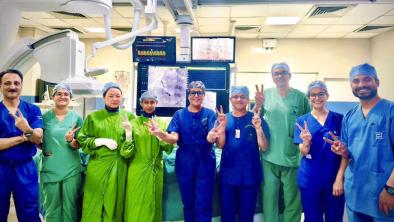
Indraprastha Apollo Hospitals, New Delhi, has achieved a major milestone in cardiac electrophysiology by successfully performing India’s first leadless pacemaker implantation through a metallic prosthetic tricuspid valve. The complex procedure was led by Dr Vanita Arora, Clinical Lead – Cardiac Electrophysiology, and her team, offering a safe and minimally invasive solution for patients with challenging cardiac conditions. Dr Vanita Arora (centre) with the cardiac electrophysiology team after performing India’s first leadless pacemaker implantation through a metallic prosthetic tricuspid valve. The patient, a 65-year-old with a long history of cardiac illness, had previously undergone tricuspid valve replacement with a mechanical valve prosthesis. When he later developed symptomatic sinus node dysfunction and atrioventricular conduction disease, a permanent pacemaker was required to restore a stable heart rhythm. However, conventional pacemaker implantation was not feasible, as passing pacing leads through a mechanical tricuspid valve could damage the prosthesis and compromise valve function. To address this challenge, the team implanted a dual-chamber leadless pacemaker using a catheter-based approach through a vein in the leg. Unlike traditional pacemakers, leadless systems are compact, self-contained devices placed directly within the heart, eliminating the need for pacing leads and surgical pockets. This approach reduces the risk of infection, device-related complications, and interference with prosthetic valves. The procedure was carefully planned using advanced cardiac mapping and precise device positioning to restore heart rhythm while preserving the function of the prosthetic valve. The patient recovered well and was discharged in stable condition. This landmark intervention highlights the expanding role of leadless pacing technologies in managing complex cardiac rhythm disorders and reinforces Apollo Hospitals’ commitment to advancing innovation in cardiovascular care.

Awards & Accolades
Dr Arun Prasad of Indraprastha Apollo Hospitals Honoured at the UK House of Lords
Indraprastha Apollo Hospitals marked a proud moment as Dr Arun Prasad, Senior Consultant – Surgical Gastroenterology, was honoured at the UK House of Lords during the India–UK Achievers Honours 2026. Dr Prasad received the Science and Innovation Award at a parliamentary reception held at the UK Parliament, recognising his contributions to advancing minimal access gastrointestinal, bariatric, thoracic, and robotic surgery in India. The recognition celebrates individuals who have made significant contributions to science, innovation, and cross-border collaboration between India and the United Kingdom. The honour formed part of a three-day India–UK engagement programme, which also hosted the India–UK Education Conference. The event brought together over 700 leaders representing more than 350 universities, companies, and sector bodies, making it the largest international education convening in the UK focused on strengthening India–UK partnerships. With more than three decades of clinical experience, Dr Prasad has played a pioneering role in advancing minimally invasive and robotic surgical techniques, enabling greater precision, reduced surgical trauma, and faster recovery for patients. In addition to his clinical work, he has contributed extensively to surgical education and international knowledge exchange, strengthening global collaboration in modern surgical care. Reflecting on the honour, Dr Prasad said, “To be announced as the winner in this category among global nominees is deeply humbling.” He also expressed his appreciation to the organisers, stating, “Grateful to Lord Karan Bilimoria, Commander of the Order of the British Empire (CBE) and Deputy Lieutenant (DL), Lord Uday Nagaraju, Member of the UK House of Lords, and the National Indian Students and Alumni Union (NISAU UK) for this distinguished recognition.” The recognition highlights the growing global impact of Indian clinicians and reinforces Apollo Hospitals’ commitment to fostering clinical excellence, innovation, and internationally recognised expertise in advanced surgical care.
New Initiatives
Apollo Hospitals Chennai Expands Community Renal Care with New Dialysis Clinic at Waltax Road, Chennai
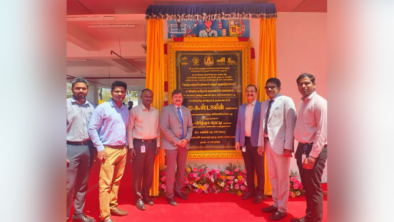
Apollo Hospitals has expanded access to essential kidney care with the launch of the Apollo Dialysis Clinic at Waltax Road, strengthening renal services for communities in and around North Chennai. The centre has been established in partnership with the Chennai Metropolitan Development Authority (CMDA), Greater Chennai Corporation, and the Health Department, reflecting a collaborative effort to improve access to life-sustaining treatment. Chronic kidney disease continues to rise in India, often associated with conditions such as diabetes and hypertension. For patients requiring long-term dialysis, convenient and reliable access to treatment plays a crucial role in maintaining health and quality of life. The Waltax Road clinic is designed to provide dialysis consultation, treatment, and rehabilitation services in a patient-friendly environment, helping individuals receive regular care closer to home. By reducing travel burdens and improving treatment continuity, the centre supports better patient adherence and outcomes. This initiative highlights Apollo Hospitals’ continued commitment to strengthening community-based healthcare infrastructure and ensuring that advanced, compassionate renal care remains accessible to the patients who need it most.
Awards & Accolades
Dr. Tripti Dubey Recognised at Femina GameChangers West 2026 for Excellence in Gynaecology & Obstetrics
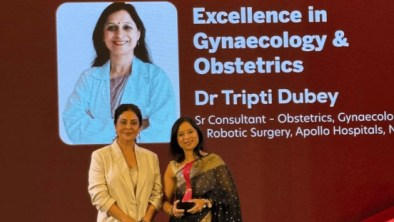
Dr. Tripti Dubey has been honoured with the Excellence in Gynaecology & Obstetrics award at Femina GameChangers West 2026, recognising her outstanding contribution to advancing women’s healthcare through clinical expertise, innovation, and compassionate care. The prestigious Femina GameChangers platform celebrates individuals who create meaningful impact across industries, including healthcare, entrepreneurship, social initiatives, and leadership. This award acknowledges pioneers whose work drives positive change and sets new benchmarks of excellence in their fields. Dr. Dubey, Senior Consultant – Obstetrics, Gynaecology & Robotic Surgery at Apollo Hospitals Navi Mumbai, was celebrated for her dedication to evidence-based, patient-centric care for women across all stages of life. Her expertise spans preventive screenings, fertility care, high-risk obstetrics, and minimally invasive gynaecological procedures, reflecting a commitment to holistic women’s health. This recognition highlights Dr. Dubey’s role as a pioneer in gynaecology and obstetrics, demonstrating how clinical excellence, personalised care, and patient education can improve long-term health outcomes for women. This award underscores the importance of specialised, compassionate care and reinforces Dr. Dubey’s position as a leading voice in shaping the future of women’s healthcare in India.

Milestones
Apollo Hospitals Jubilee Hills Hits 2,000 Robotic Surgeries Milestone
Apollo Hospitals, Jubilee Hills, Hyderabad, has achieved a significant milestone by completing over 2,000 robotic-assisted surgeries, reinforcing its leadership in technology-driven, minimally invasive healthcare. The achievement reflects the hospital’s continued commitment to advancing surgical precision and improving patient outcomes through cutting-edge robotic platforms supported by multidisciplinary clinical expertise. Robotic-assisted surgery represents an important advancement in modern surgical care. By integrating high-definition 3D visualisation, articulated robotic instruments, and surgeon-controlled precision, these procedures allow surgeons to perform complex operations with enhanced accuracy while minimising trauma to surrounding tissues. As a result, patients often benefit from smaller incisions, reduced blood loss, reduced postoperative pain, and faster recovery compared with traditional open surgery. At Apollo Hospitals Jubilee Hills, robotic surgery is used across multiple specialties, including urology, gastrointestinal surgery, cardiothoracic procedures, gynaecology, head and neck surgery, paediatric surgery, and general surgery, enabling clinicians to manage complex conditions using minimally invasive techniques. Commenting on the milestone, Dr. Sangita Reddy, Joint Managing Director, Apollo Hospitals Group, highlighted that Apollo’s experienced surgical teams across specialties have successfully integrated robotic technology into routine practice. She noted that the minimally invasive platform enables surgeons to perform complex procedures with greater precision while helping patients experience reduced pain and faster recovery. This milestone underscores the growing role of robotic technology in shaping the future of surgery, reinforcing Apollo Hospitals’ ongoing focus on innovation-driven, patient-centred care that enhances surgical safety, recovery, and overall treatment outcomes.

Leadership
Dr. Sangita Reddy Appointed President of NATHEALTH
Dr. Sangita Reddy, Joint Managing Director of Apollo Hospitals Group, has been appointed President of NATHEALTH – Healthcare Federation of India for FY 2026-2027. She succeeds Ms. Ameera Shah, Executive Chairperson of Metropolis Healthcare, who previously served as the organisation's President. NATHEALTH shapes healthcare policy, strengthens public–private collaboration, and drives initiatives that improve accessibility, affordability, and quality of care across India. Dr. Reddy assumes this role at a pivotal time, as the healthcare sector focuses on expanding preventive care, accelerating digital health adoption, and building resilient healthcare systems for the future. A recognised healthcare leader and policy advocate, Dr. Reddy has played an instrumental role in advancing technology-enabled healthcare transformation. At Apollo Hospitals, she has helped drive initiatives in digital health, telemedicine, and data-driven healthcare platforms aimed at improving patient outcomes and expanding access to care. She has also been actively involved in national and global policy discussions on strengthening health systems and fostering innovation in healthcare delivery. As President of NATHEALTH, Dr. Reddy is expected to champion initiatives that support preventive healthcare, digital health integration, and sustainable healthcare delivery models aligned with India’s long-term vision for a healthier nation. Her leadership is expected to further strengthen collaboration between industry stakeholders and policymakers, advancing a patient-centric, innovation-driven healthcare ecosystem for India’s future.

Clinical Excellence
Doctors at Apollo Hospitals Navi Mumbai Successfully Performs Robotic Hysterectomy on Patient with Rare Bleedi...
A multidisciplinary team at Apollo Hospitals, Navi Mumbai, has successfully performed a robotic hysterectomy on a 37-year-old woman diagnosed with Glanzmann’s Thrombasthenia, a rare genetic condition that severely impairs the blood’s ability to clot and can lead to life-threatening bleeding episodes. L to R: Dr. Punit Jain - Sr Consultant Hematology, Hemato Oncology & Program Coordinator Bone Marrow Transplant & CAR T-cell Therapy, Apollo Hospitals, Navi Mumbai, Mrs. Neelam Yadav (Patient), Dr. Tripti Dubey - Sr Consultant Obstetrics, Gynaecology & Robotic Surgery, Apollo Hospitals, Navi Mumbai, and Mr. Sudhir Yadav (Patient's husband). The patient had endured years of severe menstrual bleeding that often required hospitalisation and blood transfusions. During a recent episode, her haemoglobin level dropped to a critically low 4 g/dL, prompting doctors to recommend a hysterectomy as a definitive solution to prevent recurrent bleeding and improve her long-term quality of life. Doctors also noted that the woman had previously delivered a child through a Caesarean section and required multiple blood and platelet transfusions at the time due to complications related to her underlying bleeding disorder. Surgery in patients with Glanzmann’s Thrombasthenia is particularly complex due to the risk of uncontrolled bleeding, even from minor surgical interventions. To mitigate these risks, the clinical team opted for a robotic assisted minimally invasive procedure. The surgery was led by Dr. Tripti Dubey (Senior Consultant – Obstetrics, Gynaecology and Robotic Surgery, Apollo Hospitals) in collaboration with Dr. Punit Jain (Consultant – Haematology, Hemato-Oncology and Bone Marrow Transplant Specialist, Apollo Hospitals), combining expertise in robotic gynaecology and haematology to carefully manage the patient’s clotting disorder. The surgery was completed with near-zero intraoperative blood loss and without the need for transfusion during the procedure — a remarkable achievement given the patient’s underlying condition. Following a monitored postoperative recovery, the patient stabilised well and was able to resume routine activities soon afterward. This case underscores the growing role of robotic surgery in managing complex, high-risk conditions. By enabling enhanced precision, smaller incisions, and improved control during delicate procedures, robotic platforms are helping clinicians expand the boundaries of safe surgical care for patients with rare and challenging disorders.

Clinical Excellence
9-Year-Old from Bangladesh Undergoes Tamil Nadu’s First Advanced Cochlear™ Nucleus® Nexa™ Implant Surgery in A...
In a landmark procedure on World Hearing Day (March 3, 2026), Apollo Children’s Hospitals, Chennai, successfully performed Tamil Nadu’s first Cochlear™ Nucleus® Nexa™ implant surgery on a nine-year-old girl from Bangladesh. Born with severe to profound hearing loss, she will now begin a structured post-operative program to optimize speech and language development. Led by Dr. Venkatakarthikeyan C, Senior Consultant, ENT and Head & Neck Robotic Surgeon, the team employed the Cochlear Nucleus Nexa — the world’s first smart cochlear implant powered by the NEXOS™ chipset — positioning Apollo Children’s Hospitals among the early centres in India to offer this next-generation technology. This system supports firmware upgrades, allowing future improvements without additional surgery. Its advanced signal processing and stimulation technologies enhance sound clarity in challenging listening environments, supporting better speech recognition and communication. In the coming weeks, the child will enter the next phase of treatment, during which the external sound processor will be activated and programmed to optimise hearing outcomes. She is recovering well and remains under careful clinical observation as part of the post-operative care protocol. Dr. Venkatakarthikeyan emphasized, “Consistent access to sound through this future-ready technology can significantly aid a child’s speech, language, and cognitive development while fostering social engagement.” Dr. Ilankumaran Kaliamoorthy, CEO – Chennai Region, Apollo Hospitals, added, “This achievement reflects our commitment to delivering cutting-edge hearing solutions to children across India and neighbouring countries. We continue to invest in advanced technologies and multidisciplinary care to ensure the best long-term outcomes.” The introduction of this technology expands treatment options for paediatric hearing loss in Tamil Nadu and surrounding regions, offering renewed hope for improved communication, academic progress, and overall quality of life.

Technology
Apollo Hospital Financial District Installs Latest Digital Radiography System, First-of-its-Kind in South Indi...
Apollo Hospitals, Financial District, Hyderabad, has further strengthened its diagnostic imaging capabilities with the installation of South India’s first Samsung GF85 floor-mounted Digital Radiography system. This milestone forms part of a comprehensive radiology upgrade that also includes a GC85A ceiling-mounted system and two GM85A mobile units, enhancing imaging access across clinical settings. The new system is designed to improve operational efficiency through automated positioning and intelligent detector tracking, enabling faster examinations with consistent image quality. These features support accurate diagnosis while reducing patient repositioning and repeat exposures. The system adds flexibility for a wide range of routine and complex radiographic studies, supporting streamlined workflows for clinicians. In addition, the deployment of two GM85A mobile units enables high-quality bedside imaging in intensive care units, emergency areas, and inpatient wards — particularly benefiting critically ill and immobile patients by reducing the need for physical transfers. This integrated digital radiography suite enhances turnaround times, supports low-dose imaging protocols, and strengthens clinical decision-making across specialties. The initiative reflects Apollo Hospitals continued focus on clinical excellence, technology-led innovation, and patient safety, ensuring that advanced diagnostics remain accessible, efficient, and aligned with best clinical practices. With this development, Apollo Hospitals Financial District continues to set benchmarks in modern diagnostic care, reinforcing its position as a leader in advanced healthcare delivery.

New Initiatives
Apollo Hospitals & Mayapada Healthcare Seal Strategic Alliance to Reinvent Healthcare Delivery in Indonesia
In a significant step toward strengthening healthcare across Southeast Asia, Apollo Hospitals Enterprise Limited entered into a landmark Memorandum of Understanding (MoU) with Mayapada Healthcare Group, Indonesia’s leading private healthcare network. The agreement was formally signed by Dr. Sangita Reddy, Joint Managing Director of Apollo Hospitals, and Mr. Jonathan Tahir, Chairman & Group CEO of Mayapada Healthcare Group, in the presence of Mr. Budi Gunadi Sadikin, Honorable Minister of Health, Republic of Indonesia — underscoring shared commitment at the highest levels of public health leadership. This collaboration harnesses Apollo’s deep clinical expertise and Mayapada’s extensive regional infrastructure to elevate care standards in oncology, cardiology, neurology and transplant surgery through evidence-based programmes, supported by advanced technologies such as tele-radiology, E-ICU, and artificial intelligence (AI) platforms. Key benefits of the MoU include:Enhanced patient access: Patients in Indonesia will benefit from broadened access to sophisticated clinical care and international-standard treatments closer to home. Workforce development: Structured training initiatives, including continuing medical education (CME), online healthcare education via Apollo’s Medvarsity platform, and a double-degree nursing programme, will upskill local healthcare professionals. Additionally, Mayapada Healthcare and Apollo Hospitals will jointly conduct Continuing Medical Education (CME) programs and host international healthcare events to foster professional development.Deployment of specialists: Apollo plans to expand Mayapada facilities with up to 1,000 specialists including doctors, nurses and allied health professionals, strengthening operational capacity and care delivery. This alliance reflects Apollo’s patient-first ethos and its vision of delivering innovation-led, evidence-driven care that has global impact, while honoring its role as a trusted clinical leader in international healthcare collaborations.

Events
Apollo Athenaa Cancer Conclave 2026: Advancing Precision in Breast Oncology
Reinforcing its commitment to advancing breast oncology, Apollo Hospitals will host the Apollo Athenaa Cancer Conclave 2026 on 7–8 March 2026, at The Suryaa in New Delhi. The event will convene leading oncologists, surgeons, radiologists, pathologists, and researchers to advance multidisciplinary breast cancer care. Organised by the Apollo Athenaa Women's Cancer Centre in Delhi — Asia’s first dedicated cancer centre for women — the conclave is themed “From Grey Zones to Black & White in the Management of Breast Cancer.” The scientific programme will highlight precision oncology, comprehensive genomic profiling, and tumour cartography, emphasising the convergence of imaging, pathology, and molecular diagnostics in personalised treatment planning. Key sessions will address axillary management after neoadjuvant systemic therapy (NAST), immunotherapy in triple-negative breast cancer (TNBC), CDK4/6 inhibitors in high-risk HR+, HER2- early breast cancer, and advances in oncoplastic and reconstructive surgery. Dedicated workshops on digital pathology, vacuum-assisted breast biopsy (VABB), and grossing techniques will further strengthen diagnostic accuracy and surgical precision. International faculty from Germany, Spain, the UAE, and the UK will join Indian experts to share global emerging evidence and clinical insights. The conclave underscores Apollo Athenaa’s focus on precision, progress, and personalisation in breast cancer care. To know more: https://apolloathenaacancerconclave.com/

Awards & Accolades
Apollo Hospitals Ahmedabad Recognized as a Centre of Excellence in Robotic Surgery by ARIS
Apollo Hospitals International Limited, Ahmedabad, has been recognised by the Association of Robotic & Innovative Surgeons (ARIS), as a Centre of Excellence in Robotic Surgery, reaffirming its leadership in advanced, technology-enabled robotic surgery in Ahmedabad. The recognition reflects Apollo’s sustained focus on clinical excellence, innovation, and patient-centred outcomes. ARIS is a professional organization dedicated to advancing robotic surgery through education, research, and collaboration. This milestone highlights the hospital’s structured and outcomes-driven approach to robotic surgery. Under the leadership of Dr. Vishal C. Soni, Fellowship Program Director, Department of Minimal Access and Robotic Surgery, the robotic surgery programme has evolved into a high-quality, well-governed clinical service supported by globally aligned protocols, rigorous surgeon training, and continuous mentorship. Experienced multidisciplinary teams leverage robotic-assisted technology to perform complex procedures with enhanced precision, improved visualization, and greater surgical control—advancing the scope of minimally invasive surgery. Robotic surgery plays a key role in improving surgical care by enabling smaller incisions, reduced blood loss, faster recovery, and shorter hospital stays, while maintaining high standards of safety and clinical effectiveness. At Apollo Hospitals Ahmedabad, these benefits are reinforced through careful patient selection, evidence-based practices, and ongoing monitoring of clinical outcomes. The ARIS Centre of Excellence recognition acknowledges not only the adoption of advanced technology, but also Apollo’s comprehensive framework for robotics—encompassing surgeon credentialing, infrastructure, robotic surgery outcomes tracking, and patient safety. As one of the best robotic surgery hospitals in India, this achievement aligns with Apollo Hospitals’ mission to make world-class medical innovations accessible, reinforcing Ahmedabad as a trusted destination for advanced surgical care—where innovation meets expertise, compassion, and measurable outcomes.


 Best Hospital Near me Chennai


